

Crossing the Threshold of Sonic Weight
In the 1980s, thrash metal made velocity feel like a weapon. Drums became engines, guitarists turned fretboards into racetracks, and riffs were measured by the violence of their acceleration. Yet beneath that storm, another tradition was quietly widening the gates of heaviness. Doom metal did not attempt to outrun the listener. It made the listener stand still beneath the falling stone. For musicians seeking to understand that transformation, the history of doom metal reveals a central principle: tempo can function as architecture, not merely as a number on a metronome.
Black Sabbath established the primeval forge. Down-tuned resonance, deliberate pacing, blues-derived dissonance, and somber lyrical gravity created riffs that seemed to occupy physical territory. The result was not simply music played slowly. It was an environment built from decay, pressure, and anticipation. True heaviness thrives in cavernous negative space and low-frequency saturation, where every chord has time to bloom, deform, and leave a shadow behind it.
The Black Sabbath Sigil and the Rejection of Pure Speed
Black Sabbath”s foundational insight was that tension becomes more powerful when it is denied immediate release. A riff such as “Black Sabbath” does not rush toward its destination. It approaches like an omen, allowing the interval, distortion, and silence around each gesture to become part of the composition. Tony Iommi”s down-tuned guitar increased physical mass while also accommodating the limitations imposed by his injured fingertips. That practical adjustment became an aesthetic sigil. The guitar no longer merely articulated notes. It summoned weight.
During the speed-dominated 1980s, this approach represented a deliberate refusal of the era”s athletic ideal. Thrash prized acceleration, precision, and continuous kinetic motion. Doom pioneers instead treated repetition as a pressure chamber. Pentagram, Witchfinder General, Cirith Ungol, and Saint Vitus carried Sabbath”s vocabulary into harsher emotional territory, where despair, addiction, isolation, and personal ruin were not decorative themes but structural forces. The contrast can be understood through several opposing priorities:
- Velocity versus impact: fast metal creates immediate adrenaline, while doom allows a single gesture to become physically imposing.
- Technical density versus hypnotic simplicity: intricate playing displays control, while repetition tests the listener”s relationship with time.
- Constant motion versus suspended threat: silence and decay can make the next downbeat feel inevitable and enormous.
Saint Vitus transformed vulnerability into sonic armor. On Born Too Late, Dave Chandler”s guitar tone is powerful without relying on ornamental complexity, and the riffs often feel closer to blunt architecture than to conventional virtuoso display. Wino”s themes of loneliness, drinking, and alienation give the music a raw human center. Candlemass, by contrast, expanded the same slow foundation into grand, operatic drama. The difference between the bands is instructive. Candlemass built cathedrals; Saint Vitus inhabited abandoned rooms. Both proved that heaviness could emerge from structural conviction rather than fretboard gymnastics.
The Physics of Decay and Low-Frequency Resonance
Slow-tempo heaviness works through the body as much as through the ear. Low frequencies are felt in the chest, the floor, and the movement of air around a speaker cabinet. When a guitarist sustains a down-tuned chord, the fundamental tone and its distorted overtones remain present long enough for the listener to identify their changing texture. Pick attack gives way to bloom, bloom gives way to feedback, and feedback begins to behave like a second instrument. The chord becomes an event with a beginning, middle, and end.
That process requires room. A dense sequence of rapid riffs can disguise individual decay tails because the next attack arrives before the previous sound has fully disappeared. A slow riff exposes everything: tuning instability, unwanted resonance, excessive gain, poorly controlled low mids, and the exact point at which a speaker begins to protest. This is why doom tone is not achieved by simply adding distortion. Fuzz, amplifier saturation, cabinet response, pickup output, and playing dynamics must cooperate. The sound must remain enormous without collapsing into undifferentiated mud.
| Element | Frenetic high-BPM riffing | Low-tempo monolithic chords |
|---|---|---|
| Frequency behavior | Rapid attacks emphasize upper mids and transient definition | Fundamental lows and sustained low mids dominate the physical impression |
| Sustain | Shorter perceived decay because new notes arrive quickly | Extended decay exposes resonance, feedback, and harmonic movement |
| Listener impact | Adrenaline, urgency, and kinetic excitation | Pressure, suspension, dread, and bodily saturation |
| Role of silence | Often functions as a brief transition | Acts as a load-bearing structural element |
Negative space is therefore not emptiness. It is a pillar. A rest before the downbeat allows anticipation to accumulate, much like the pause before a gate opens in a dark sanctuary. When the chord finally lands, its force is amplified by the absence surrounding it. The most effective doom arrangements understand this relationship intuitively. The silence does not interrupt the riff. It completes the riff by giving the ear a measured distance from which to feel its return.
Architects of the Monolith from Candlemass to Death Doom
Candlemass gave doom a monumental vocabulary. Epicus Doomicus Metallicus and Nightfall treated slow riffs as foundations for operatic vocals, dramatic solos, expansive drumming, and themes of death, occultism, magic, and theological anxiety. The music was not passive or shapeless. Its grandeur depended on contrast: a solemn riff could support a vocal line that rose like a bell through a ruined cathedral, while a carefully placed acceleration could make the surrounding stillness feel even heavier.
At the other end of the spectrum, Saint Vitus preserved doom”s abrasive vulnerability. Later extreme bands pushed the architecture into more violent terrain. Autopsy”s Severed Survival, released in 1989, is widely treated within doom history as an early death-doom landmark, while Dream Death, Celtic Frost, Winter, and Incantation helped establish related forms of slowness, filth, and cavernous atmosphere. Death-doom retained the possibility of acceleration, but its slow passages introduced a new kind of bodily horror. The riff did not merely sound ancient. It sounded diseased.
Foundational acts commonly relied on a few structural blueprints to create cathedral-like scale:
- Establish the ground: begin with a riff whose rhythm is simple enough to feel inevitable and whose tuning leaves room for the fundamental note to resonate.
- Layer the omen: introduce vocals, harmonized guitars, feedback, or dissonant intervals that expand the emotional dimensions without overcrowding the frequency spectrum.
- Delay release: resist the urge to change sections too quickly. Repetition should create altered perception, not merely fill time.
- Break the monument: use a faster passage, sudden stop, or textural collapse to reveal how much pressure the preceding section has accumulated.
Funeral doom pushed these principles toward near-stasis. Winter”s Into Darkness foreshadowed a form in which songs could become glacial environments rather than conventional compositions. Funeral doom generally favors longer, more contemplative structures, while death-doom tends to remain more controlled, visceral, and capable of acceleration. Sludge carried the weight into a different chamber, combining slow tempos with punk abrasion, abrasive distortion, and a sense of physical exhaustion. In every case, the boundary of heaviness moved when artists treated time as material.
Forging the Tone Through High Headroom and Deliberate Restraint
A convincing slow-tempo tone begins with clarity beneath the damage. High headroom in the amplifier or signal chain can preserve the shape of low notes before fuzz and power-stage saturation deform them. This does not mean that every doom rig should be clean or pristine. It means that the distorted sound needs a stable foundation. Excessive gain often removes the distinction between the initial strike and the sustained body of the chord, leaving the mix loud but weightless.
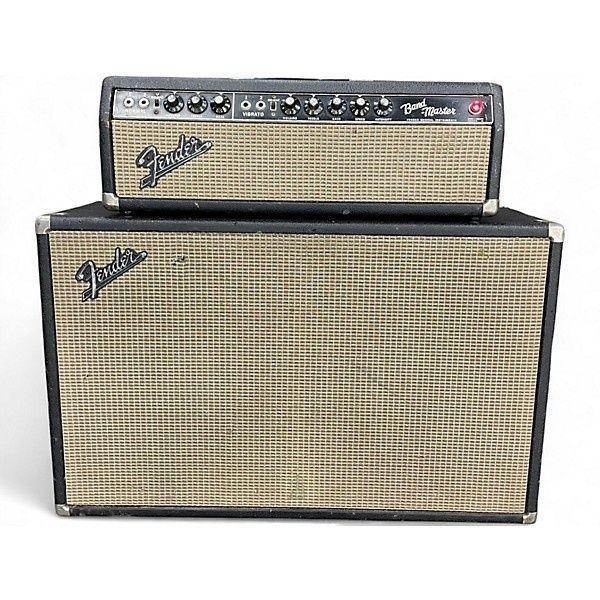
The ritual of doom tone is therefore a negotiation between control and surrender. Fuzz supplies compression, harmonic density, and unruly upper overtones. Speaker displacement turns electrical energy into a physical performance, while tube saturation can soften transients and encourage feedback. At low velocities, the player must also manage the instrument with unusual discipline. A slow riff exposes every unnecessary string ring, every premature release, and every inconsistent pick attack.
- Choose a tuning that supports the song”s register without forcing the bass frequencies beyond the room”s ability to reproduce them.
- Use gain as a texture control, not as a substitute for volume, arrangement, or conviction.
- Shape low mids carefully so the guitar remains massive while bass and kick drum retain their own territory.
- Allow feedback to develop, but decide where it begins and ends rather than treating noise as an automatic solution.
- Leave space between major statements so the decay can be heard and the next impact can acquire meaning.
- Practice with a metronome at uncomfortable slowness, then refine the pocket until every downbeat feels deliberate.
Pacing demands more precision than speed often reveals. A rapid passage can conceal minor timing inconsistencies beneath a continuous stream of attacks. A slow passage places each beat under a harsh lantern. The drummer must control breath, subdivision, and cymbal decay. The guitarist must sustain without drifting. The bassist must decide whether to reinforce the fundamental or create a second current beneath it. Every musician becomes a guardian of duration.
Mastering the Art of Enduring Mass
True heaviness is an architectural conquest of space, not a sprint. Speed can create danger, excitement, and technical awe, but slow tempo creates the conditions in which sound becomes environment. Sustained resonance gives the ear time to inspect distortion. Negative space builds anticipation. Low-frequency energy turns a riff into something tactile, while repetition transforms a simple figure into a psychological pressure system.
The legacy of Sabbath, Saint Vitus, Candlemass, Autopsy, funeral doom, and sludge continues to define the outer borders of auditory intensity because the central lesson remains inexhaustible. A single chord, placed with sufficient patience and shaped with sufficient care, can carry more mass than a hundred notes. For modern musicians and listeners, the next threshold lies inside that duration. Let the note bloom, let the room answer, and listen for the hidden architecture within the decay.